

Frequently Asked Questions
MT Analyzer
Applications
How can I determine true or filtered colour using turbidity measurement instead of filtering of the sample?
True or Filtered Colour is determined by filtering samples through a 0.45 micron filter before analyzing the sample in a spectrophotometer. When running large amounts of samples on automated systems, this filtering can become time consuming and heavy on resource usage. An alternative method for determining true colour without filtering has been established, through the use of a turbidity meter to quantify the contribution from solids present in the sample. MANTECH can easily combine automated Turbidity and Colour analysis on one system, determined from one sample, to provide True Colour results without the need to filter.
The determination is as follows:
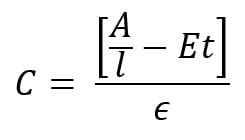
- C is the colour result.
- A is the sample absorbance.
- l is the cell path length.
- E is the scattering coefficient estimated at 0.00264 NTU-1 cm-1.
- t is the turbidity.
- e is the color absorptivity coefficient.
What are the different types of calibration profiles?
Calibrations can be linear, logarithmic, single-line, and multi-line fit. The calibration method used depends on the method required. pH and colour calibrations are linear, single-line fit calibrations. Conductivity and turbidity calibrations are multi-line, linear type calibrations. ISE (fluoride, chloride, ammonia, etc.) use a logarithmic multi-line calibration type.
What is the recommended type standard for automated Turbidity Calibrations and Quality Control?
MANTECH recommends the use of turbidity standards made with suspensions of microspheres of styrene-divinylbenzene copolymer for all turbidity applications. Standard Methods dictate that “Secondary standards made with suspensions of microspheres of styrene-divinylbenzene copolymer typically are as stable as concentrated formazin and are much more stable than diluted formazin.” Any dilutions used to prepare turbidity standards, as well as blanks, must use degassed DI water. This is especially important for accurate low-end turbidity analysis, as there is often a positive bias due to bubbles introduced into the DI water solution when it is being produced/dispensed. This effect becomes more noticeable with lower NTU readings, and can cause challenges with performing an accurate calibration. To degas DI water, it must be dispensed into a very clean bottle or container, and left to sit for ~24h. You will see bubbles form on the side of the container as the water degasses. After degassing, it is ready to use for blanks and standards preparation.
What are the wavelengths used by the T10 turbidity meter?
The IR (infrared) light version of the T10 and T20 turbidity meters use an emitter and detector specifically at 860nm. The WL (white light) version of the meter uses a tungsten lamp and a photodiode detector, both of which operate within the full visible light spectrum. The photodiode detector has a spectral peak response between 400-600nm.
What is the wavelength measured for turbidity by Standard Methods (white light)?
Standard Method 2130B (Nephelometric Method) specifies that a laboratory or process nephelometer should have a detector system with a spectral peak response of 400 to 600 nm. MANTECH’s T10 and T20 Turbidity meters and automated turbidity applications conform to this requirement. The T10 and T20 turbidity meters are designed specifically to conform to the international requirements for reporting turbidity measurements. The IR version conforms to ISO 7027 and EN27027. The WL version conforms to APHA SM 2130B, ASTM D1889, and EPA 180.1. Both can be used on the same system if conforming to multiple standards is required.
What is Turbidity?
Turbidity is defined as the amount of suspended particles in a solution, measured in nephelometric turbidity units, (NTU). It is used as a general indicator of the quality of water, along with colour and odour. The US EPA has a maximum contaminant level (MCL) of 5 NTU for drinking and wastewaters.
Read MANTECH’s turbidity method abstract here.
General Information
What is the time of analysis per parameter and for multi-parameter analysis?
The timing for analysis of different parameters depends on several different factors, like the concentration of the sample and the equipment used.
Another factor is the total available sample volume in the vessel on the AutoMax Autosampler bed. With some combinations of parameters, larger sample volume allows for simultaneous measurements, resulting in faster total analysis time than sequential measurement. A larger sample volume may require a larger sample cup, which decreases capacity on the same model Autosampler. For example, an AM401 can accommodate 112x50ml tubes, or 62x125ml cups. In some, the cases the same set of parameters can be analyzed in 2-5 minutes faster when using the 125ml cups vs 50ml tubes.
It is important to understand your requirements in terms of capacity and throughput speed, total batch capacity required and/or daily sample loads and if overnight, unattended analyses will be applicable.
Individual Parameters
| Parameter | Average Time of Analysis (Minutes) per Sample |
| pH | 1 – 3 |
| ISE by Direct Measure | 1 – 5 depending on sample concentration |
| Titrations (Alkalinity, Acidity, Hardness) | 2 – 5 depending on sample concentration, injection rates and stability control in the titration method. |
| Conductivity | 1 – 2 |
| Colour | 2 – 3 |
| Turbidity | 2 – 3 |
Combined Parameters
MT10 & MT30 Models
| Parameters | Estimated Time of Analysis (Minutes) per Sample* | |
| 50mL Tubes | 125mL Cups | |
| pH-Alkalinity | 3 – 4 | |
| Conductivity-pH-Alkalinity | 3 – 4 | |
| Conductivity-pH-Turbidity | 4 – 7 | 3 – 4 |
| Conductivity-pH-Turbidity-Colour
(only MT30 for these suit of parameters) |
6 – 9 | 3 – 5 |
MT100 Model
| Parameters | Estimated Time of Analysis (incl. TitraSip & RapidAlk) | |
| 50mL Tubes | 125mL Cups | |
| Conductivity-pH-Alkalinity | 3 – 5 | 3 – 5 |
| Conductivity-pH-Alkalinity-Fluoride | 7 – 10 with single TitraSip or 3 – 5 with RapidDuo configuration. | |
| Conductivity-pH-Alkalinity-Turbidity | 7 – 10 | 6 – 8 |
| Conductivity-pH-Alkalinity-Colour | 4 – 6 | 4 – 6 |
| Conductivity-pH-Alkalinity-Turbidity-Colour | 8 – 11 | 4 – 6 |
PC-Titrate Upgrade
Will MANTECH Pro Software™ operate the hardware I currently have?
MANTECH Pro will operate most of the hardware you currently have. The following hardware will require an upgrade:
- The old-style Burivar burets will have to be upgraded to our new MANTECH Burets. Burets are operated by an IP address, unique to each Buret, and will require an Ethernet-to-USB adapter we supply (setup will vary by system).
- The old-style Conductivity Meters (4310) will have to upgraded to our 4510 Conductivity Meters. COM port connection is no longer on the Interface but rather through a 1-port or 2-port USB-to-Serial adapter(s) (will vary on system setup).
- The old-style Turbidity Meters (Turbidity AssayPlus) will have to upgraded to our T10 Turbidity Meters.
- Computers Operating System (OS) that is not Windows 10 will not operate MANTECH pro. Minimum computer specifications are listed here.
With the increase in USB connections to the computer, a multi-USB 3.0 hub may also be required.
PDF version for download: Required Hardware Upgrades
Please note: Service and support for PC-Titrate software ended June 30, 2026.
Other
Support and Troubleshooting
Applications
Why does my turbidity method require a multi-line calibration?
For turbidity, the reasoning is a bit different. The MANTECH turbidity flow cell has specific optical properties which are different than the cuvettes which you would manually insert (for example the sealed standards for the 3-month calibration). The difference in optical properties between the flow cell cylinder and the cuvette can cause the relationship between actual NTU and expected NTU to be slightly non-linear. And like the fluoride, this is really only applicable in the low end of the measuring range, typically <1NTU. To ensure the lowest detection limit possible, we use multi-line to accurately capture how the optical properties of the flow cell are different than the cuvettes.
What is the shelf life of MANTECH turbidity standards?
MANTECH Turbidity Standards have a one year shelf life from the date they are put in stock. The Expiry Date is always shown along with the lot number on the bottle labels.
Get Smarter Solutions, Today.
Our innovative water and wastewater analyzers have faster, safer processes, with fewer hazardous reagents. Start using MANTECH solutions for more accurate data that drives responsible outcomes.