For drinking water treatment, the removal of all organic species is critical to the success of a plant in delivering clean and safe drinking water. Various physical and chemical processes remove organics from a raw water stream, and the treated water is monitored for organic load to determine the effectiveness of the plant’s treatment. When there is too much organic load in the treated water, various problems can happen in the distribution system leading to growth of microorganisms, corrosion of infrastructure, and compromised tap water quality. Elevated organic load can also lead to disinfection by-products forming in the treated water. It is therefore imperative to ensure the removal of all organics before water reaches the distribution system.
Often the measurement of organics in a treatment plant is performed through the use of optical measures such as UV254 (UV absorbance at 254nm) and SUVA (specific UV absorbance). These methods are surrogate measures that rely on organics absorbing light. In reality, this does not include all organic species that should be removed through treatment. There are a range of organics that do not absorb light, and there also can be a great amount of variation in the degree to which an organic species absorbs light compared to others. For example, a solution of naphthacene will absorb almost 100 times as much light at 250 nm as a solution of benzene of the same molar concentration. For these reasons, the optical based surrogate measures of organics have a number of shortcomings and potential for missing or under-estimating organic pollution of specific species.
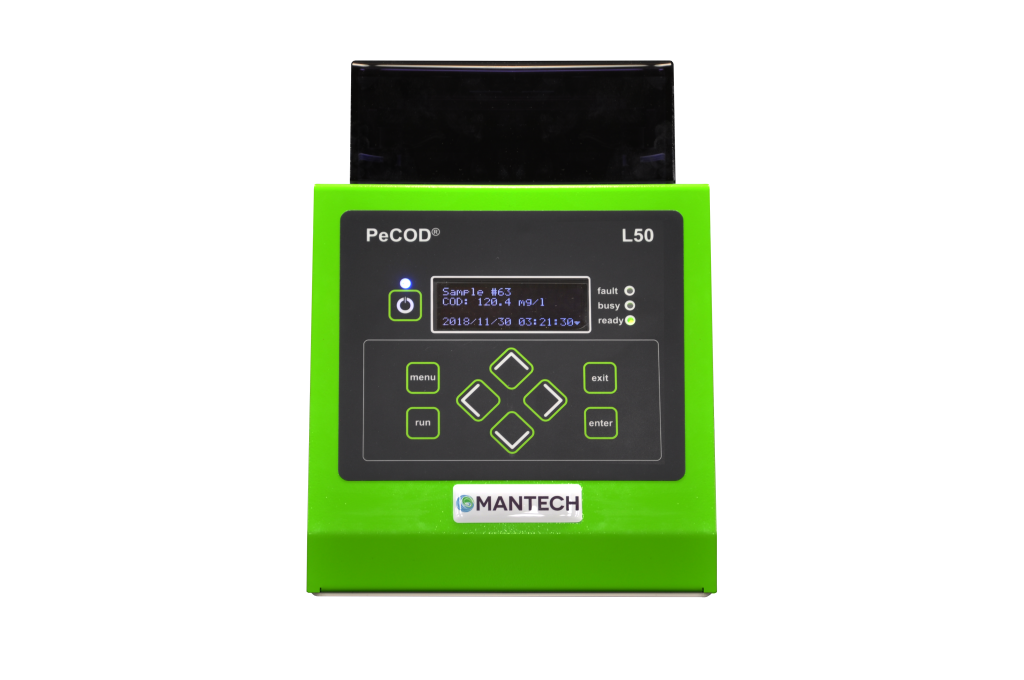 The PeCOD Analyzer is an empirical tool for determining bulk organics concentration, providing confidence in detecting all species of organics regardless of the light absorption properties. The PeCOD performs advanced oxidation on a small aliquot of sample containing organics, and quantifies that oxidation through the charge generated from the reaction. This provides treatment plant operators with confidence in detecting spikes in organics, while also providing benefits for the plant through process optimization and reduction in chemical usage through over dosing. The PeCOD method is easy and quick to learn, requiring no formal lab training and able to be implemented directly in a plant or factory environment. Results are attained in just 3-5 minutes!
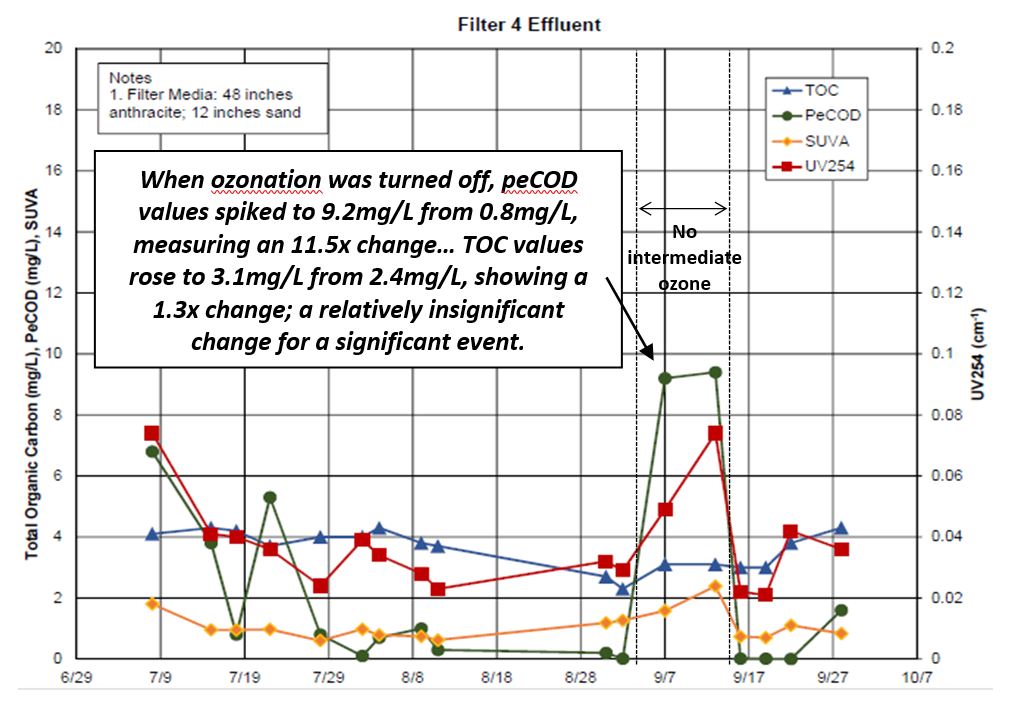
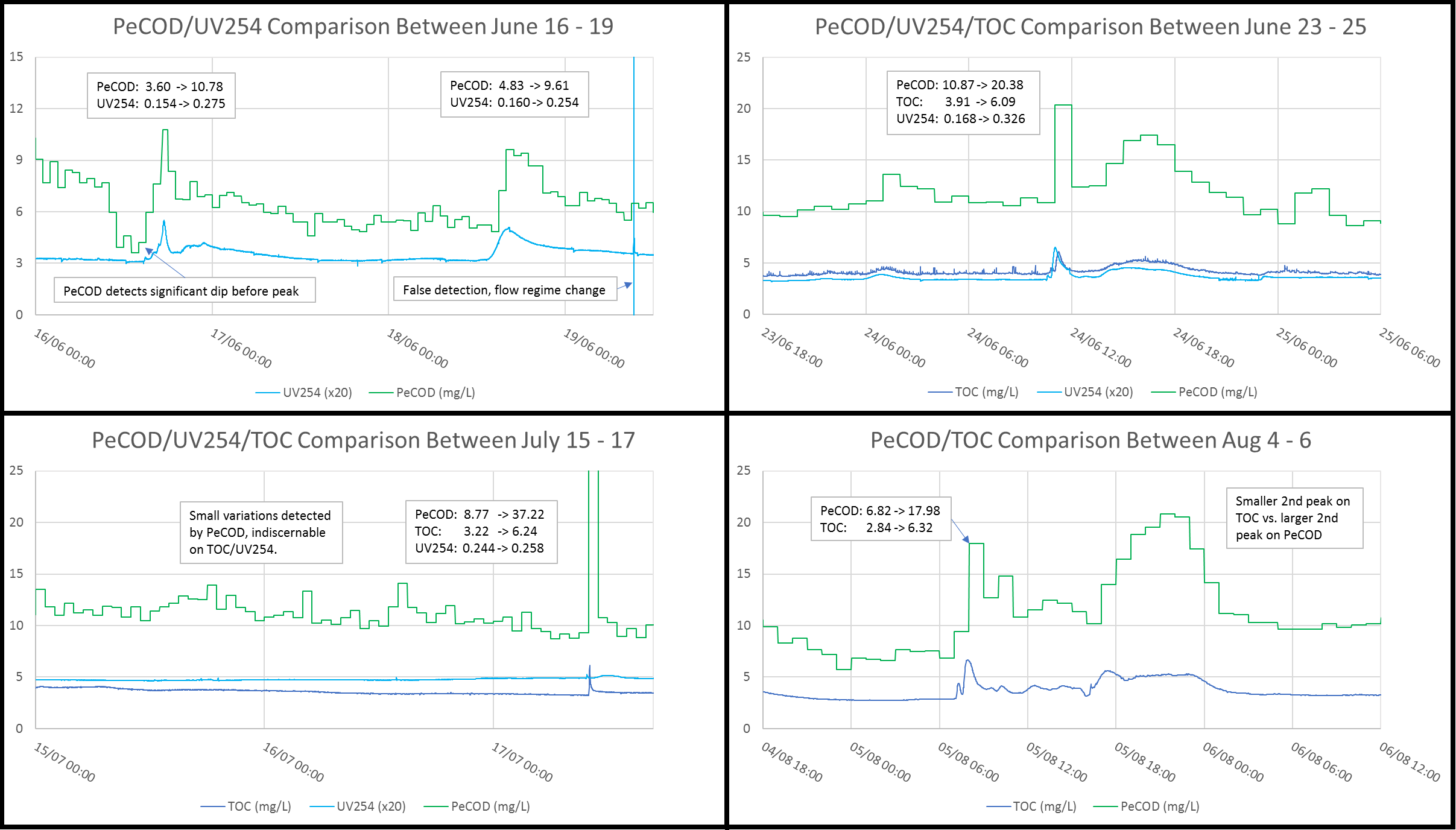
Below are some case study examples comparing the response of PeCOD vs other methods such as UV254, SUVA, and TOC (total organic carbon):
Event Detection Comparison at a Texas WTP
Online Surface Water Monitoring at a Massachusetts Utility
Taste & Odor Event Identified by PeCOD at Florida Water Utility